The Money Is There. Baltimore's Masjids Are Not in the Room.
Maryland has awarded nearly $25 million to protect houses of worship from hate. Muslim institutions have collected less than six cents of every dollar, and until this year Baltimore City’s Muslim institutions had collected nothing at all. The problem is not the program. The problem is us, and it is fixable.
By Sharif Silmi
On the morning of May 18, 2026, two gunmen opened fire at the Islamic Center of San Diego while roughly 140 children sat in classrooms inside. Amin Abdullah, the 51-year-old security guard at the door, engaged the shooters and called the lockdown that sent the building into locked rooms before he was killed. Nadir Awad, a 57-year-old neighbor, and Mansour Kaziha, the mosque’s 78-year-old caretaker, were murdered alongside him. Investigators identified the attackers as neo-Nazi accelerationists. Analysts called it the first deadly mass shooting at an American mosque. Every parent whose child walked out of that building owes the outcome to one thing: the mosque had invested in security, and the man it hired did his duty.
That is the context in which Maryland’s Muslim institutions should read the following numbers.
What the state’s own reports show
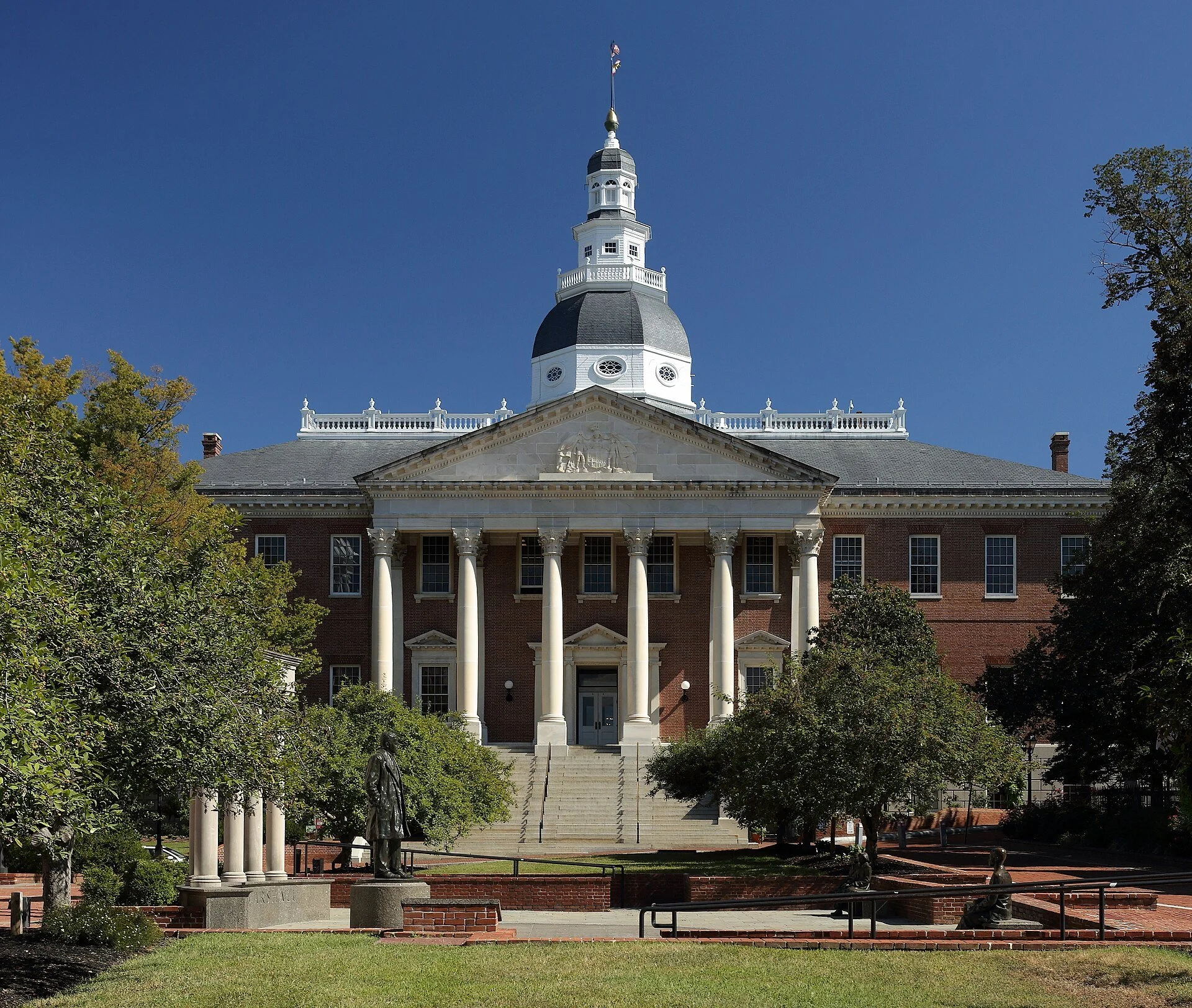
The Maryland State House. The Protecting Against Hate Crimes program has awarded $24.8 million since 2022. Photo: Martin Falbisoner, via Wikimedia Commons (CC BY-SA 3.0)
Since 2022, Maryland has run the Protecting Against Hate Crimes Grant Program, administered by the Governor’s Office of Crime Prevention and Policy under Public Safety Article § 4-1601. The statute reserves at least $1 million a year for faith-based organizations; in practice nearly all of the money goes to them. The Baltimore Crescent compiled every award listed in the four annual reports the office has filed with the General Assembly, covering fiscal years 2023 through 2026: 314 awards totaling $24,783,003.
Jewish institutions received 179 of those 314 awards, $14.8 million, roughly 60 percent of every dollar the program has ever paid out. Christian institutions received $7.2 million, about 29 percent. Muslim institutions received 16 awards totaling $1,445,231. That is 5.8 percent of the money, in a state whose Muslim community is among the largest per capita in the nation.
Baltimore City tells the sharpest version of the story. City institutions drew $7.16 million across 84 awards over the four years. Jewish institutions took 74%, equal to $5.3 million dollars allocated to Baltimore City through 61 of the 84 awards. In the program’s first three years, fiscal 2023 through 2025, not one dollar went to a Muslim institution in Baltimore City. The first and only city award to a Muslim organization arrived in fiscal 2026: $49,870 to the Islamic Leadership Institute of America. The Crescent’s own directory counts fifteen masjids inside the city line, and not one of them has received a dollar in the program’s history, in the same city where a Jewish federation, THE ASSOCIATED, properly received the single largest award of fiscal 2026 at $224,047.
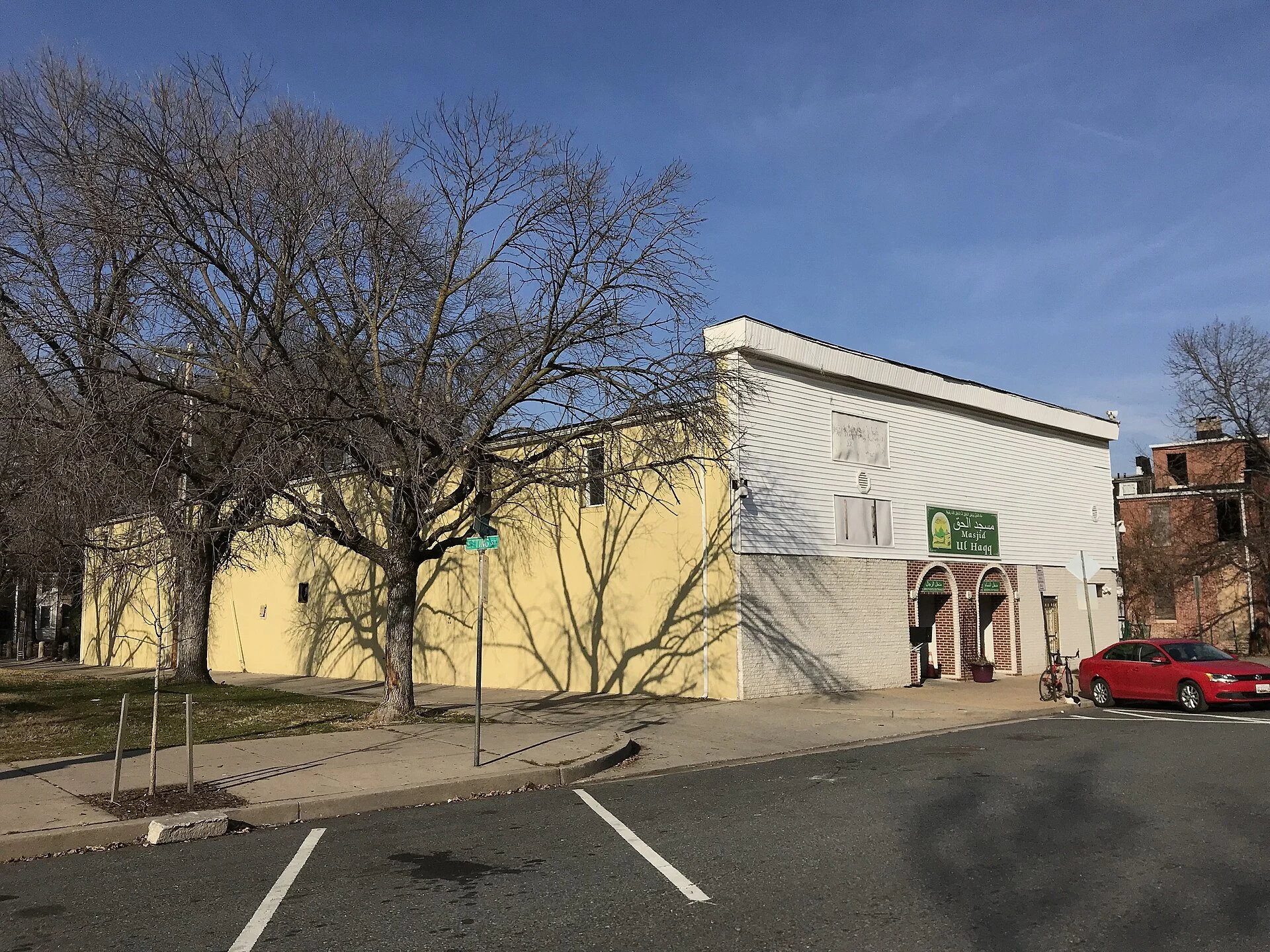
Masjid Ul-Haqq on Islamic Way, home of Baltimore's oldest Islamic congregation. No city masjid has received a state security grant. Photo: Baltimore Heritage
The threat is not hypothetical
Meanwhile the Trump administration and its sycophantic yes-men in Congress have led a large segment of the population, often left behind by an economy that prioritizes wealth over work, to blame their problems on Islam and immigrants, propagating the fantastical lie that American Muslims are quietly working to impose Shariah law upon the masses. Last week, addressing the Jewish American Summit, the crazed Israeli spy, Shin Bet asset and Christian Evangelical Mosab Yousef yelled out, “I don’t want Muslims in America. Get the f*ck out of the United States, go back to the Sh*thouse where you came from.” The comment drew roaring applause as did his attacks on the Quran and the Prophet Muhammad (Peace and Blessing be Upon Him). Likewise, far-right activist Jake Lang led a group of neo-Nazis to attack Islam and Muslims in Dearborn, Michigan, while here in Maryland, Montgomery County has been a hotbed of anti-Palestinian and Islamophobic attacks on schools, teachers, and students.
CAIR logged 8,683 civil rights complaints nationwide in 2025, the highest single-year total since it began reporting in 1996. Our masjids run full-time and weekend schools, youth programs, and daily congregational prayers on predictable schedules in buildings that anyone can walk up to. The need to level up their security is written in the names of the San Diego martyrs Amin Abdullah, Nadir Awad, and Mansour Kaziha. May Allah grant them Divine Mercy and enter them into the highest level of paradise, ameen.
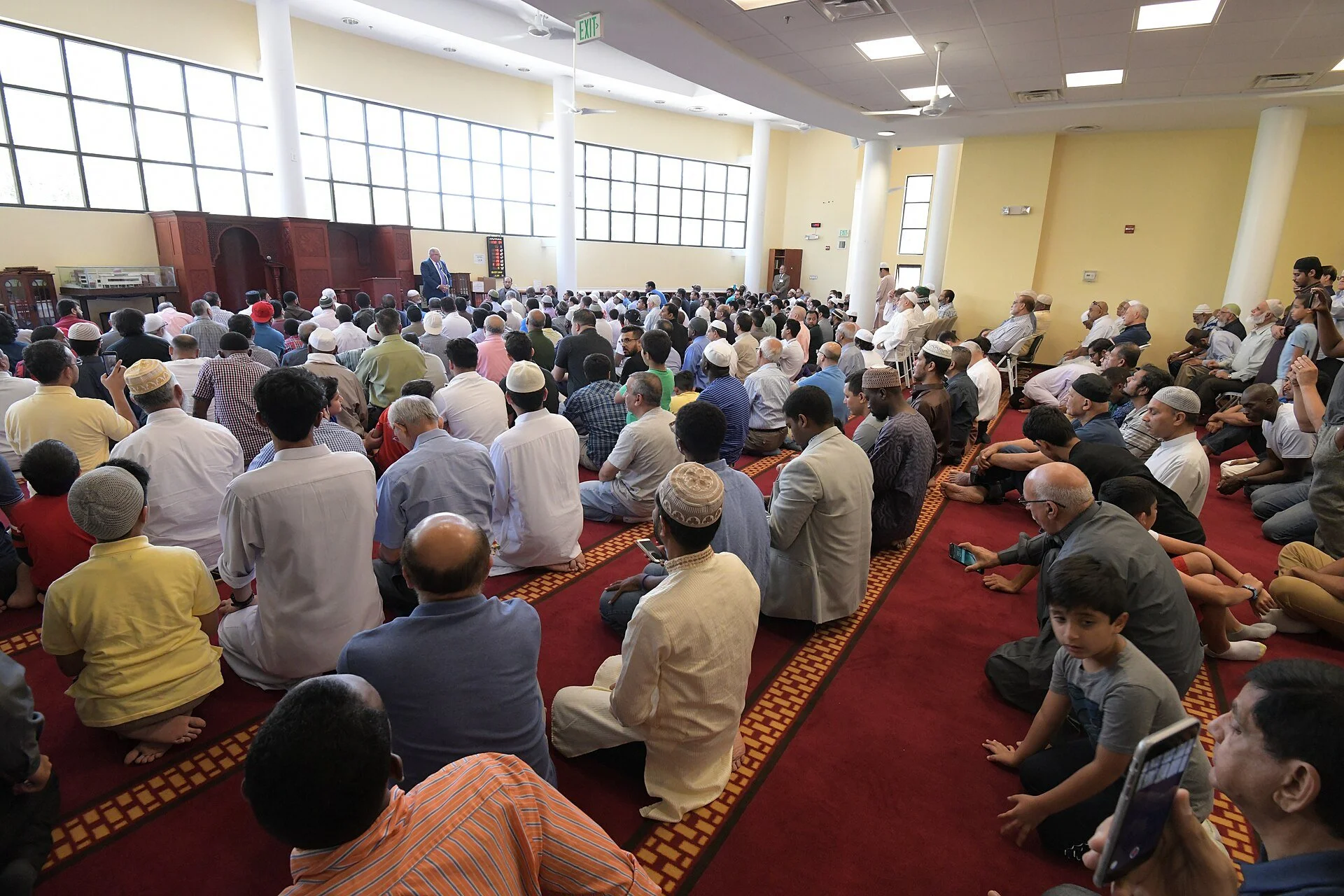
Friday prayer at the Islamic Society of Baltimore, which has won security grants in three straight years. Photo: Joe Andrucyk/Executive Office of the Governor, via Wikimedia Commons (CC BY 2.0)
Why the gap exists, and what it is not
Having dug through the public record, I want to be very clear, there is no evidence that the state is picking favorites. In truth, my initial hypothesis was that well-connected communities with effective lobbying efforts were able to leverage outsized support for their institutions, the process in-place and the reports show no such thing. The program funds applications, and the honest accounting is that Jewish institutions apply, apply well, and apply every year, while most of ours have never filed at all.
That success deserves to be named for what it is. The Jewish community of Baltimore has spent generations building disciplined communal infrastructure: a central federation that coordinates dozens of agencies, professional security directors, grant writers on staff, and a culture of circulating every funding opportunity through the whole network the week it opens. Synagogues, day schools, a kosher certification agency, and a volunteer ambulance corps all appear in the award lists, year after year, because the information reaches them and the applications go out. When the program doubled to $10 million in fiscal 2026, their institutions were positioned to capture the increase the same season it appeared. That is not luck and it is not favoritism. It is organization paying its dividends, and it is the model we should be studying with respect and copying without embarrassment.
Now look at our side of the ledger.
Sixteen Muslim awards in four years, spread across just ten institutions, in a state where the Crescent’s directory counts seventy-five masjids before a single school or service agency is added. The same few names carry the list: the Islamic Society of Baltimore, the Islamic Society of Frederick, and Prince George’s Muslim Association account for eight of the sixteen. These institutions proved the program is winnable; the Islamic Society of Frederick has won in three separate years. Muslim applications win when they exist. The problem is that almost nobody files one. Generally, each masjid operates as an island and sees one another as competitors for resources. There is no shared calendar flagging the application window each spring, no common grant writer, no board-to-board channel through which the masjid that won this year walks the masjid down the road through the paperwork next year. Information dies in the inbox of whichever volunteer happened to receive it.
While the gap remains substantial, the trend is beginning to improve. In fiscal 2023, exactly one Muslim institution in the entire state applied successfully. In fiscal 2026, eight did, and the Muslim share of the money rose from 2.6 percent to 9.9 percent. The Turkish American Community Center won $206,000. The Muslim Family Center in Howard County won $192,500. Dar al Taqwa and Dar-us-Salaam each won six figures. Every one of those awards happened because somebody in that building decided to fill out the application. The program did not change. We did, slightly, and the results followed immediately.
What must happen now
The fiscal 2027 round has already been announced: $10 million, awarded this past August, with 116 applicants statewide requesting more than $14 million. The next application window opens in the spring, and awards now run as high as $200,000 for larger institutions, $50,000 even for the smallest. Here is the program, in plain terms: the state will pay for cameras, reinforced doors, lighting, fencing, and trained security personnel at your masjid, and the application is public information.
Every masjid board in the state should designate one grant officer this month, before the next notice of funding opportunity is released. Second, the institutions that have already won, ISB above all, should convene the ones that have not and put their completed applications on the table as templates; a masjid in Frederick figured this out three times, and that knowledge belongs to all of us. Third, our organizations should stand up a shared security fund and a shared grant-writing capacity, because a community that can build a masjid can hire one professional to serve thirty of them. The Crescent has done its part first: we have published a complete guide to the application, How to Apply: Maryland's Protecting Against Hate Crimes Grant, built from the State's own application package, with every deadline, document, contact, and companion program in one place, and we will keep it current through the spring window.
The deeper lesson runs past any single grant program. Civic engagement is not a luxury for a community under threat; it is the mechanism by which a community stops being invisible to the institutions that allocate protection. We are late, and the gap is wide, and none of it is irreversible. The families in San Diego were saved by preparation that happened years before the morning it was needed. Our preparation starts with a form the state is waiting for us to file.
Sharif Silmi is the founding editor of The Baltimore Crescent.